 |
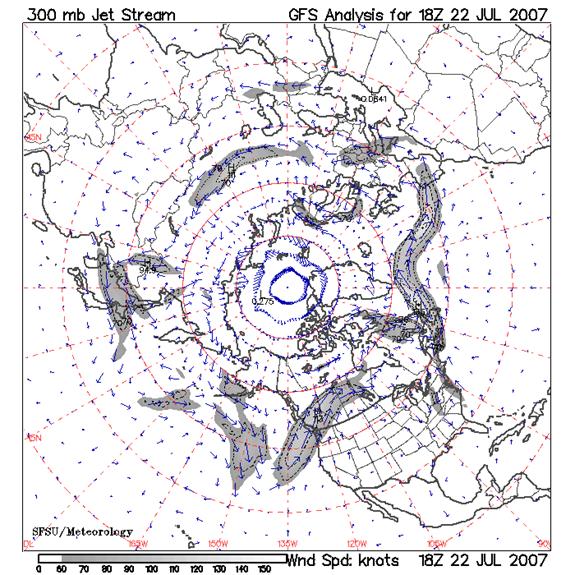
The Jet Stream was moving quickly to the North over New Jersey that day. |
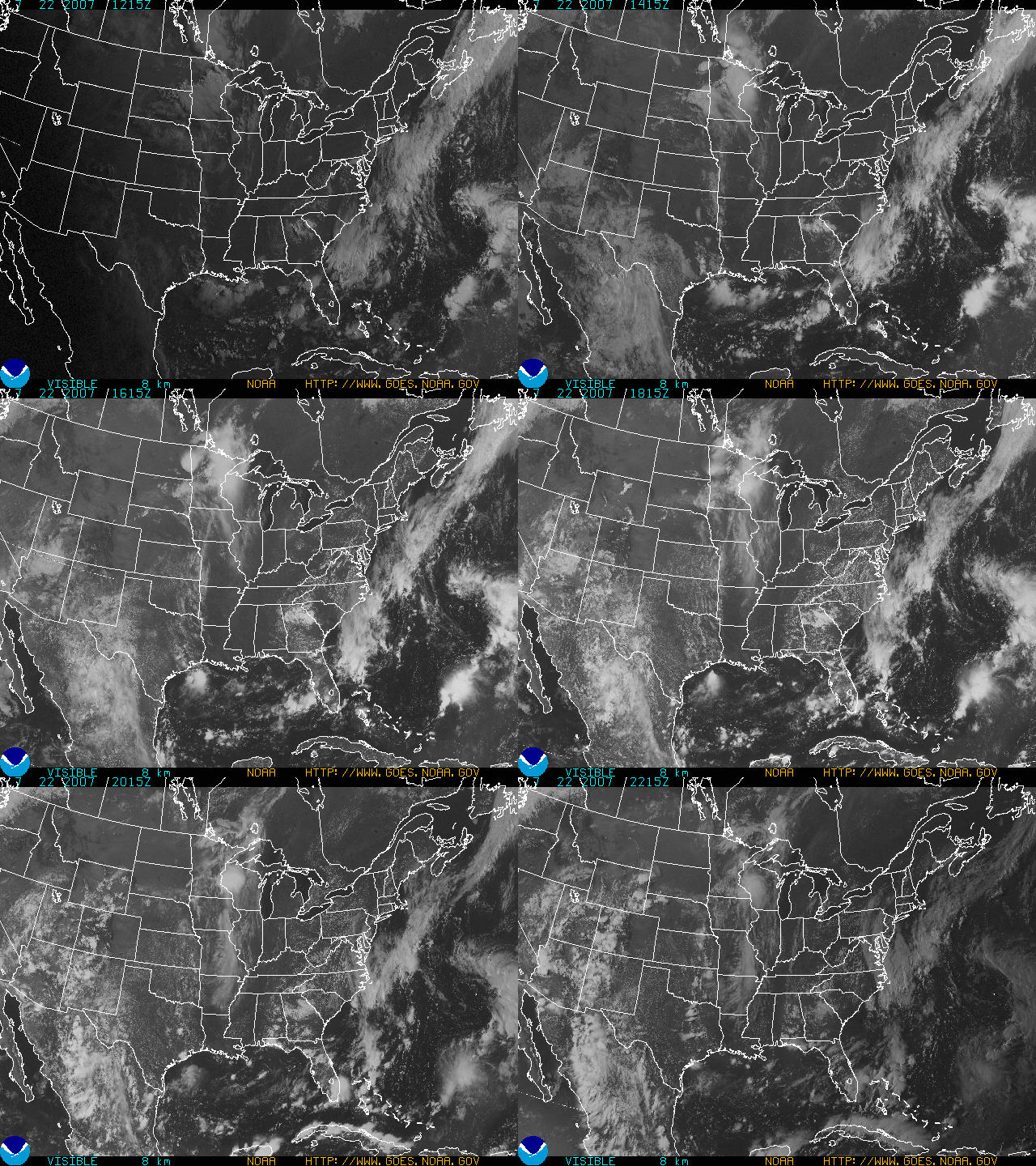 |
Cloud Patterns - An Upper High Pressure System brought cold Cirrus Clouds from the
North,while warm Cumulus clouds came
from the South.
|
|
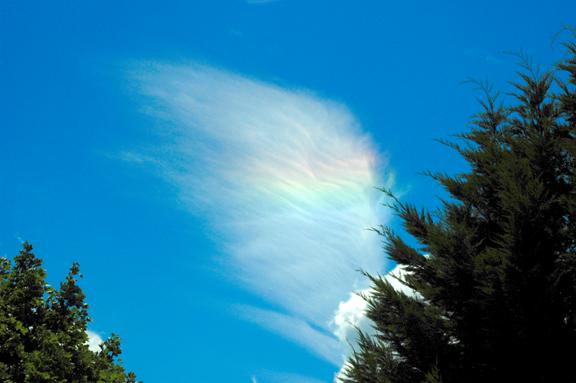
Circumhorizon Arc
Fragment - When I first saw this I thought it was an iridescent cloud.
|
|
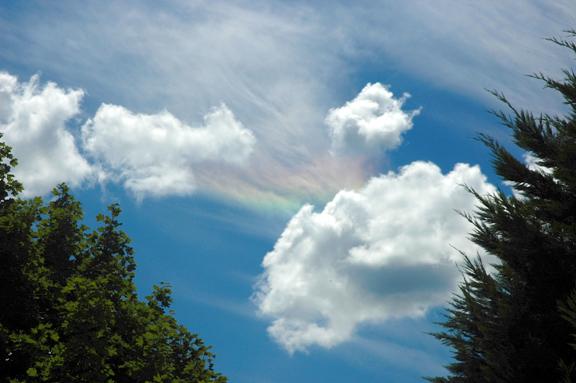
There are perfectly formed the Ice Crystals in the upper atmosphere. The Plate Crystals that are parallel to the ground refract the sunlight at a 46% angle. We see this beautiful result of these perfect crystals and alignment.
Even on a hot July day, there is ice in the air.
|
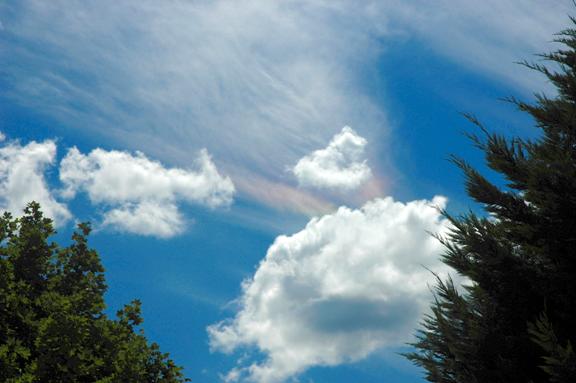
|
The Cumulus clouds are moving quickly to the east, while the Cirrus are
moving to the South. The arc is playing hide and seek.
|
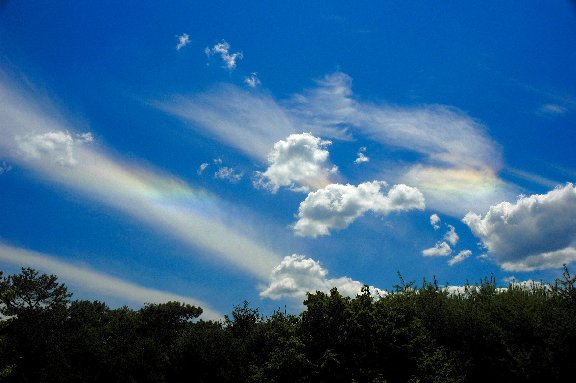
|
A wide angle view (27 mm focal length) reveals multiple pieces of the
arc that are visible. Judging by the wide field of view a
Circumhorizon Arc would stretch among the separated
Cirrus clouds.
|
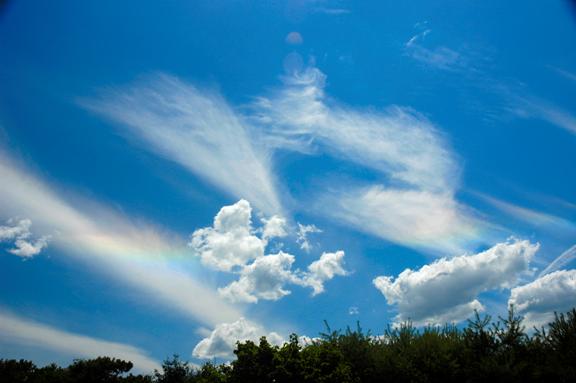
|
The Circumhorizon Arc dissipates.
|
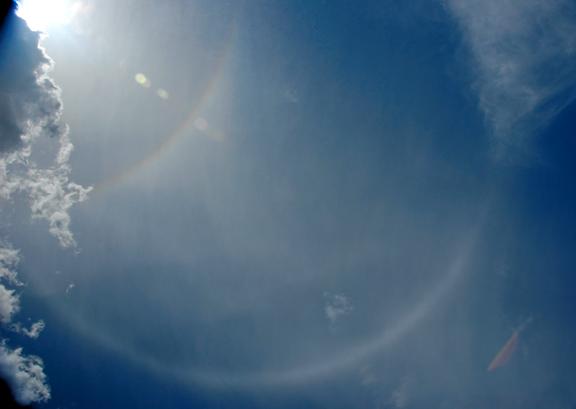
|
The Circular Halo and Parhelic Circle become prominent.
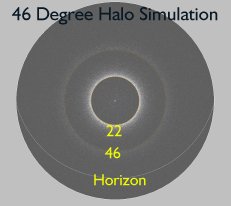
There was discussion that the Circumhorizon Arc may have been a rare
46 degree Halo. However, when a simulation was run for a 46 degree
Halo, no Parhelic Circle would form, just a 22 degree Halo. As a
Parhelic Circle was visible, that rules out a 46 degree
Halo.
|
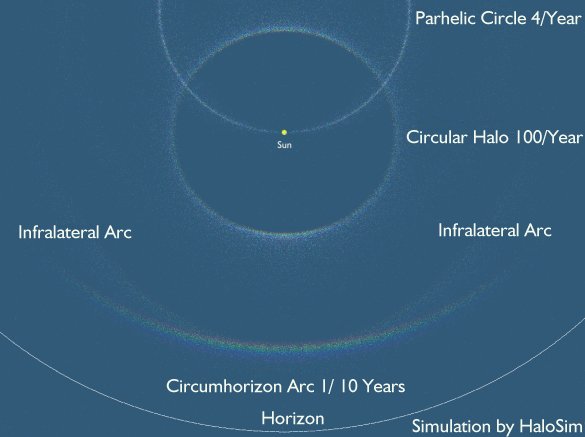 |
Circumhorizon
Arc, Infralateral Arc, A Parhelic Circle and a
Circular Halo.
The Sun was at 68 degrees elevation when the Circumhorizon Arc was
imaged. The Sun was at 62 degrees elevation when the22 deg halo and parhelic circle
were imaged. Hexagonal Plate Crystals most likely formed these Arcs,
as per the simulation. HaloSim was run to produce this simulation. The odds of a
Circumhorizon Arc forming are ~ once every ten years.
Parhelic Circles form ~4x per Year
Circular Halos form 100 x per Year.
http://www.atoptics.co.uk/halo/whyinfr.ht
The odds mentioned here are referenced from Germany, at ~50deg latitude.
The odds to see a CHA from New Jersey at 40 deg latitude , give a higher frequency, as the Sun reaches a higher altitude, and spends much more time at the higher altitude then in Germany. The frequency currently is unknown to me, however I have seen them on 5 separate occasions over the past 2 years, since I have begun to look for them.
|
Take me back to
Sitemap
What's New
Table of Contents
If
you shop Amazon.com please use this link.
All our proceeds support this web site and our
Near Earth Objects research program.
 |
Earth Science Picture of the Day has a
wonderful photo of the Circumhorizon Arc as well, taken from
Pilesgrove NJ.
A special Thanks to Les
Cowley (Atmospheric Optics) for
his work on determining the phenomena in play.
|